
Growth is great for business – but should it come at any price?
Uberall created a platform to bridge the online and offline world and connect companies with their local customers. It launched six years ago and experienced astonishing yearly growth.
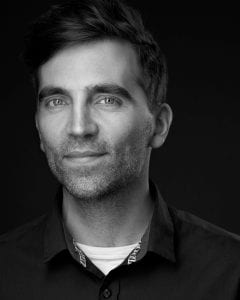
Velocity² founder Ben Fletcher has been talking with Uberall’s co-founder and CEO Florian Hübner about the upsides and downsides of driving a company’s growth.
BF: What was the hardest thing you experienced as you went through your growth journey?
FH: Every successful growth company has to have a good product and find the right market fit. It’s crucial to hire the right talents for your team and occupy a certain niche with your product – although not so much of a niche that nobody understands what you’re doing.
Our challenge is that we have to quickly get in front of enough people to make them aware that they have a problem we can solve and fundamentally improve their business. How can we educate the market fast enough?
I’d say from a more generic entrepreneurial perspective everything has been done before. People have solved problems like hiring, tech scalability and so on. But it’s getting the sheer mass of things right and juggling them while you take care of hiring, culture, technology challenges and building out specialised functions.
BF: It’s interesting that you say these problems have been solved but it’s a different problem when you structure, communicate and set objectives for 20 people to when you’re 200 or even a thousand people. You can’t just take some sort of generic solution because the way your company operates keeps changing. You need to be specific about what you need at a particular stage.
FH: People have solved the transition from a 50 to 100 to 200 people company but I know for sure that every person I speak to for advice usually has gone through one, maybe two such transitions – but for sure not 10. It feels like no-one can tell you what’s really right. They can only tell you what works for them.
BF: The problem I have experienced is that if you are in a fast-growing sector and your revenues are going up and you’re getting a lot of funding, that money and success can paper over a lot of cracks. So companies can reach the 500 people stage and only realise they have a problem when things start slowing down. Those problems could be baked in because when they were smaller they didn’t realise it was an issue and could just push through.
FH: In our first years we were growing at 800% and I think I’m not revealing too much when I say that it has slowed down a bit since. Back then I found it very interesting to face questions like how much do you allow yourself to deviate from the original plan? I’m not only talking about KPIs (Key Performance Indicators) but how you thought you would reach those KPIs.
We’ve always had a good mix and we have been on the mark for our plans in recent years. But there are also opportunities that we hadn’t seen while making a plan and then there are things that we planned for that didn’t happen. There needs to be some flexibility for both.
BF: As your growth rate declines a little bit as the inevitable result of scale, your predictability also increases. To use a golf analogy, when you start playing you’re not very good but you can still have a good round and shoot quite a low score – but you can also have a massive score. As you get better at the game your range of scores narrows. It’s the same with businesses; if you’re growing at 100% a year you have more predictability than if you’re growing at 400% because the range will be narrower.
FH: For us, it’s been quite a transformation as we maintain high growth while still investing into the connecting bits and pieces of the business – because you do collect inefficiencies while growing at a super-fast pace.
BF: I think this is really interesting because when Reid Hoffman (co-founder of Linkedin) talks about ‘blitzscaling’ he mentions ‘letting some fires burn.’ You don’t have to run your company absolutely perfectly and if you try to do that you’re going to really slow your growth rate down. But there are some really critical things around your culture – putting in the infrastructure for the sort of processes to enable you to grow in the future. If you don’t get them right they will come back and bite you. There’s no point in growing massively fast and then it all crumbling around you. At some point, you’ve got to take stock and realise we’ve got to work as much on creating the business for the long term as we have towards generating as much growth as we can next year.
FH: Then there are all the interests, not only shareholder interest but the dynamic you want to have in the business. You want to have high growth and maybe you say it doesn’t matter if it’s 100% or 80% – and actually, I think for a lot of investors it doesn’t matter either. They’ll say it’s high growth and look at other metrics. Forgoing the extra growth and investing in efficiency I think is often a really smart move in order to set yourself up for the next year and the years after that.
BF: I come from a kind of privately-owned, self-funded, organically-grown business background. You had to run everything efficiently and make sure it worked for the long term because there wasn’t a ‘raise $30m and carry on regardless’ option.
FH: I think that’s a very important point because a lot of what happens, happens early on in the business. In some way, I’m glad that in the seed round people didn’t give us $10m. It would probably have put us on a path with much more inefficiency because there would have been an expectation of higher growth. There might have been less diligence on the budget and the spending and less fear of the consequences of failing in, say, the first year because you had enough money for the next three years.
BF: I’d like to talk a bit about leadership. I definitely believe that once something is a known quantity in your business you shouldn’t be doing it as the CEO or founder. You should pass it on to someone else.
In the CFO or COO roles where it’s a lot of processes and making sure the ‘i’s’ are dotted and the ‘t’s’ are crossed that’s quite easy to delegate. It’s like a weight off your plate. But what about stuff you’re really interested in and love being involved in? Are there areas where you feel you are struggling to let go?
FH: That’s a question I have been asking myself. It’s good to be generally involved in one aspect of the business yourself. If at some point my role was to only have weekly meetings with a handful people then that wouldn’t be challenging anymore. I think you have to have an awareness where you have an edge over what others can do. Due to my background, I am more involved in product and engineering than in sales and marketing. Generally, I’m very involved in the strategic conversations around all of those things and of course in shaping the mid and long-term vision.
BF: The whole process of delegating the day to day is so you can concentrate on the strategic vision. Product and strategy are two sides of the same coin; product is the expression of your strategy in a way. I think the issue for me is that I love doing product strategy and maintaining quality but I’d be too tempted to get involved in the detail that I shouldn’t be getting involved in. That can be really annoying for someone who has come into the company as, say, head of product. Where do you draw the line?
FH: I think there’s an easy answer to that, it’s just very hard to accomplish. You have to have the right people taking over. If someone was Chief Product Officer at another company they would have to work really hard to get to a level where they could be on a par with people who have been working on your product for perhaps six years and have become industry experts. Either you find someone who is willing and capable of doing that or you grow these people from within your organisation.
The right leadership is super important. 50% of underperformance is simply bad management, they say.
BF: I think sometimes you want to bring someone in from the outside because the scale of your product is changing and you need to have someone with knowledge of managing on that scale. It’s very hard to grow that person internally because where do they get that experience from? But when you have found the right person and they’re trained up to take on full responsibility then you have to let go and not be involved. I find that very hard.
FH: It seems to be quite obvious that nobody’s perfect and is going to do a 100% perfect job. But if you put your ego away and find somebody who does perhaps a 90% good job which was close to how you would have done it then you’re probably really far ahead.
BF: I think you can feel under pressure because, as human beings, we think there is a right answer and a wrong answer. Often the truth is that whichever option you go for one might be 10% better than the other. The important thing is to make the decision – because if you keep kicking the can down the road you’re making a decision by default. And you don’t want to be doing that.
FH: I don’t think that’s really good advice, as I have given it to people who then desperately jump into making decisions. I think it’s most important that you make a decision after you have really thought about it. So I would reframe that a little: sit down, really think about it, then don’t delay decision making.
BF: Is there any advice that you’ve received that has really stuck in your mind?
FH: I think one really big one is to find the right time to move from working in the business to working on the business. To me, that’s a game-changer.
I have another super generic one: it is all about the people. I know some teams that have turned s**t into gold and I know others that have turned gold into s**t. If you can be the head coach of a team that puts everybody in the right position, set everyone up for success, then you will win. It’s just way harder than it sounds.
BF: It’s been good to talk with you, Florian. Thank you for your time.
________
You can see Florian’s talk, How and when to expand your product range, on the 29th January at Velocity²!
Velocity² tickets are available here.